The story
The premise.
The amphitheatre of Tarraco held twelve thousand people. Standing in it today, you can still feel that. We gave it back its crowd.
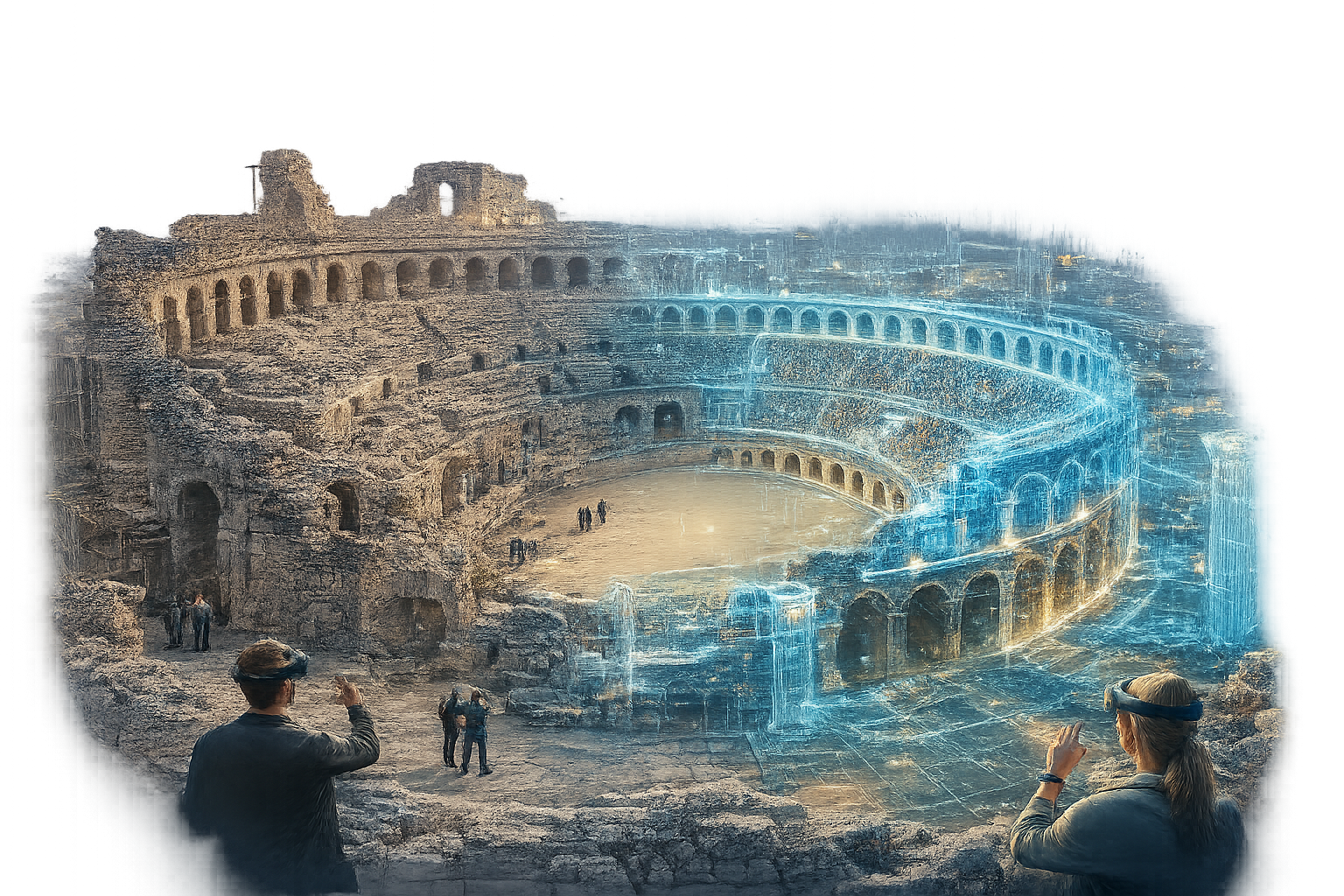
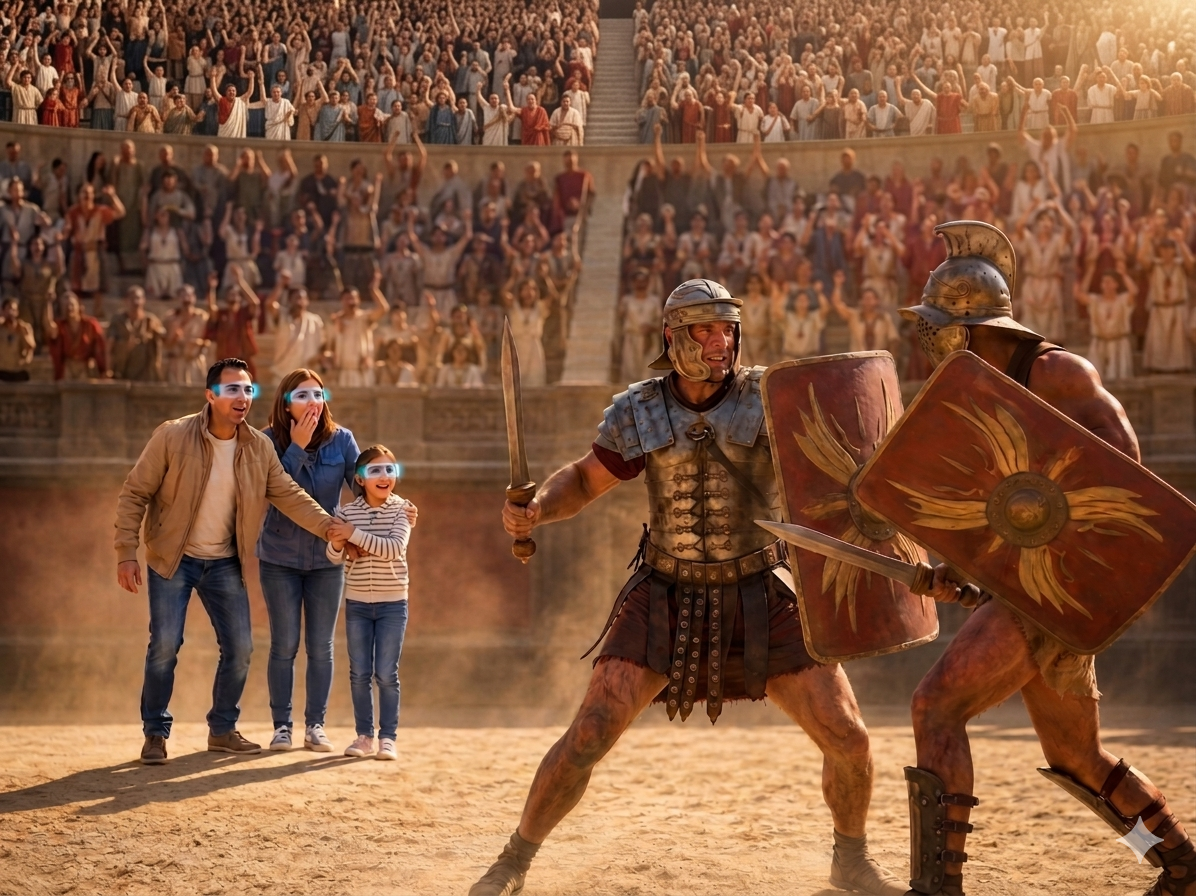
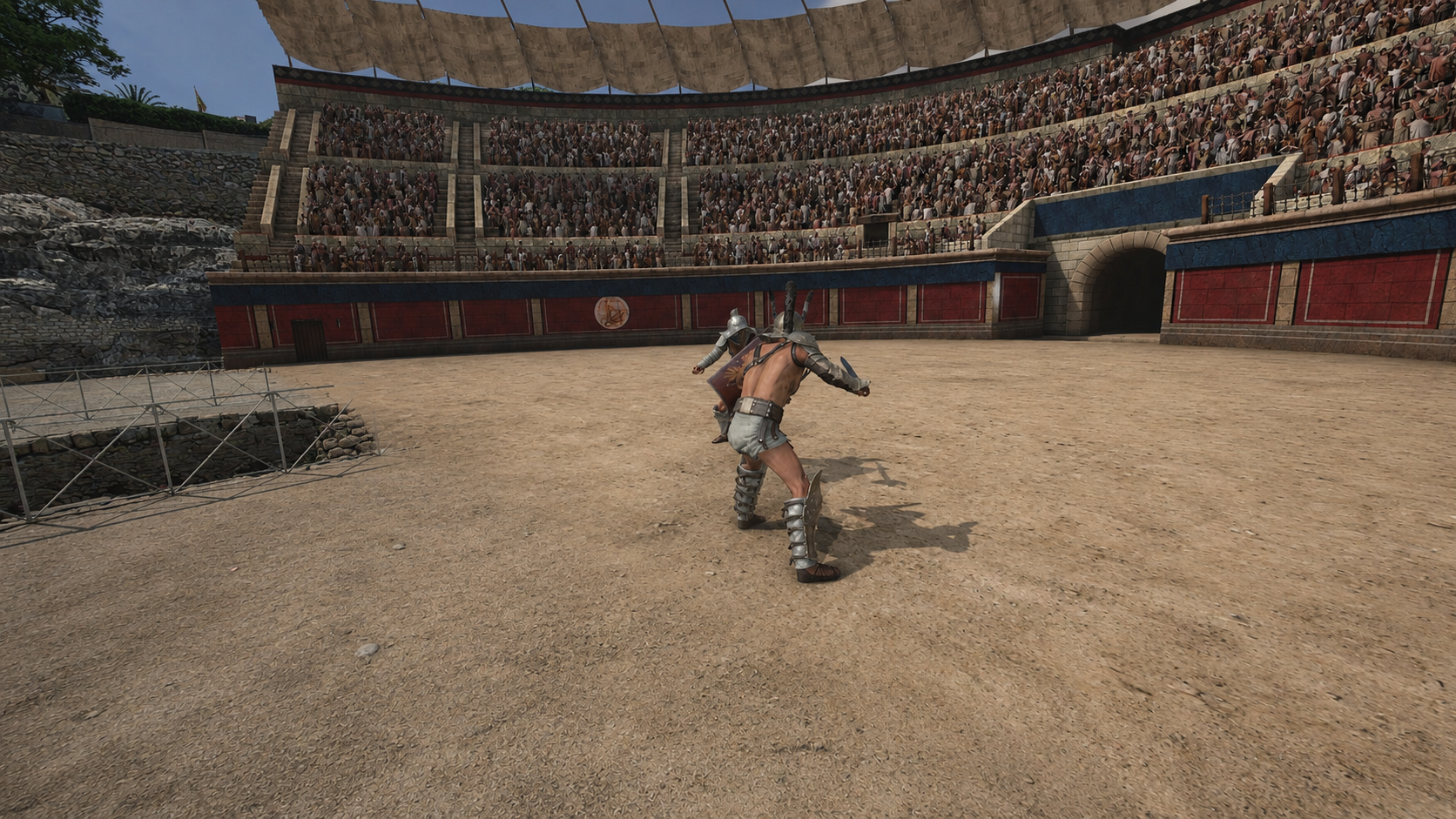
The Roar of Tarraco is our first free-roam Mixed Reality experience deployed inside a UNESCO World Heritage site. Visitors walk onto the real arena floor, put on a headset, and the ruin rebuilds around them: tiers of stone rise back to full height, the awning stretches overhead, and the seats fill with a Roman crowd that reacts to what happens below. Over ten minutes they learn how the building worked, who came here, and what a day of games actually sounded like — standing on the same stones the whole time.
Built with the historians and archaeologists of the Ajuntament de Tarragona, who are responsible for the site. Nothing is invented for spectacle: the reconstruction follows the archaeological record, and the fiction sits on top of it.
Key data
The numbers behind the experience.
Watch the experience
Welcome to The Roar of Tarraco
Inside the experience
A ruin, rebuilt around you.
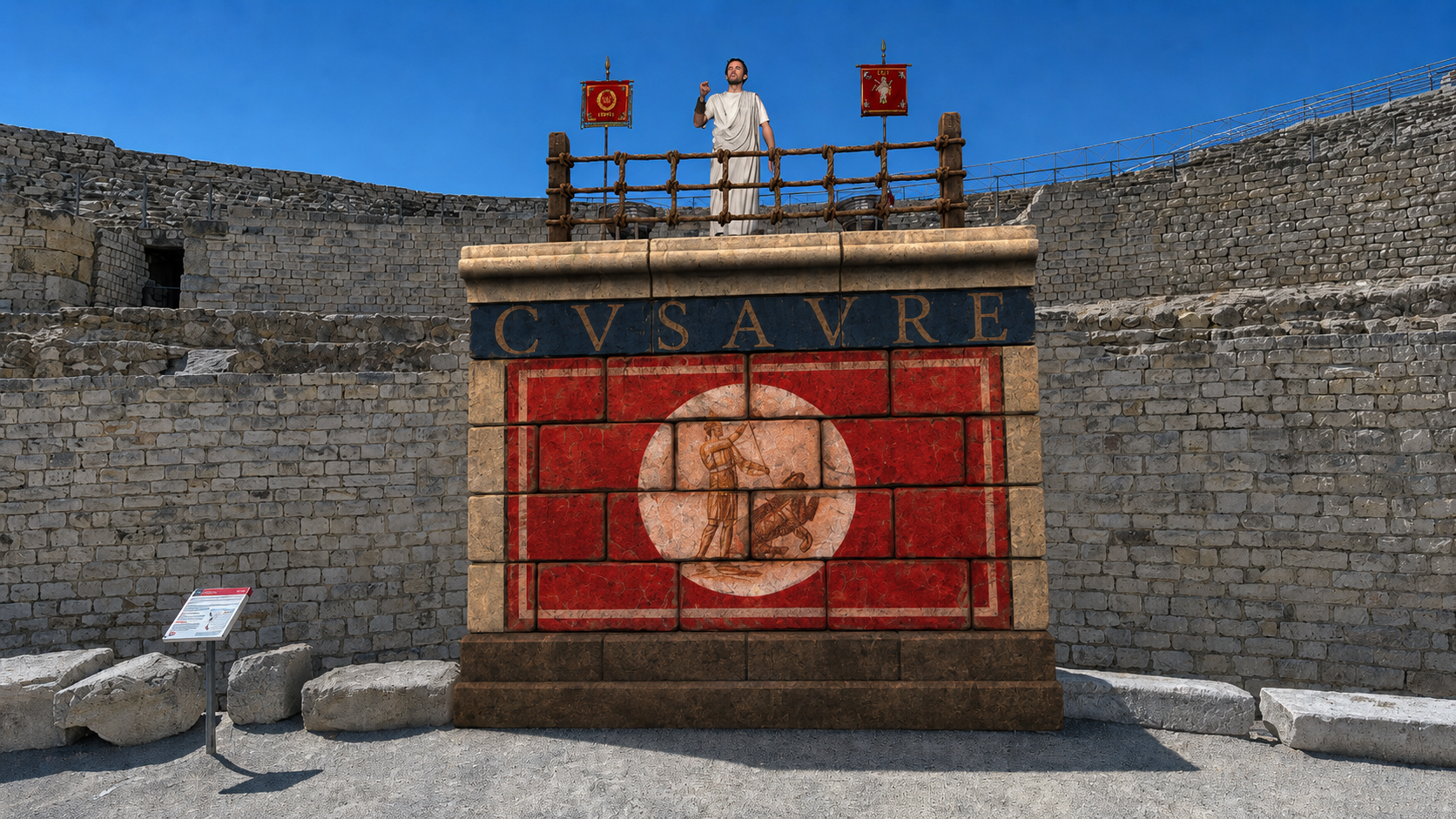
You arrive as a novicius — an apprentice gladiator on his first day — and Marcus Valerius Mesala, the magistrate paying for the games, takes you through the arena before the crowd arrives. The site itself stays exactly as it is. Everything added to it exists only in the headset.
How we built it
From first site visit
to opening day.
Working inside a protected monument adds one constraint above all others: leave no trace. Every stage below was run with the site's archaeologists in the room.
-
01 · ConsultationWeek 1–3
Archaeological briefing with the Ajuntament de Tarragona. Conservation limits agreed before a single design decision: no fixings, no floor loads, no permanent installation.
-
02 · Story & scriptWeek 4–9
Narrative written with historians and storytellers, then reviewed line by line against the record. Five-language script development in parallel.
-
03 · Survey & reconstructionWeek 10–20
Millimetre scan of the standing remains, then a full CGI reconstruction registered to it — so the virtual amphitheatre lands exactly on the real one as the visitor walks.
-
04 · On-site buildWeek 21–25
Reversible hardware install, tracking calibration across an open-air ruin in changing daylight, and training for the site's own front-of-house staff.
-
05 · Launch1 July 2026
Opened to the public alongside the standard amphitheatre ticket, with a combined pack and a dedicated programme for school groups.
Bring an experience
like this to your site.
We design, build and launch Mixed Reality experiences for cultural sites, theme parks and heritage institutions worldwide. Zero upfront investment. Live in 3–6 months.